
-
1. Put the Model Number in the Purchase Order
-
2. Understand Tamper Resistant Outlets
-
3. Match Ratings to the Load
-
4. Look Behind the Faceplate
-
5. Demand Test Documentation
-
6. Evaluate Their Defect and Return Process
-
7. Do a Pilot Run Before Bulk Production
-
Final Notes: When This Checklist Is Overkill
I'm a quality and brand compliance manager at a wholesale electrical distributor. I review a few hundred switch and outlet products each month, plus assembled control panels before they ship. In our 2024 audit, I rejected 8.2% of first deliveries—most for avoidable spec issues. This checklist came out of that experience.
Here's what to look for in a panel supplier, based on the mistakes I've seen in bulk control panel orders. It's also useful if you're planning a private label protector program and need to evaluate a factory. Here are seven steps, ordered by the frequency of problems I see.
1. Put the Model Number in the Purchase Order
First rule: the model number goes in the purchase order. That sounds basic, but a huge portion of spec disputes start with vague language like “Leviton switches” without a part number. Leviton makes dozens of switch configurations, from single-pole with a pilot light to three-way Decora. If you say “switch” and the supplier interprets that as residential toggle, it's wrong.
Include the exact catalog number, color, and whether the outlet needs tamper resistant (TR) construction. If you're unsure which Leviton part fits your market, get the manufacturer's spec sheet first. At least, that's our process.
2. Understand Tamper Resistant Outlets
Tamper resistant outlets can be mistaken for a defect—that's a trap. Because TR outlets have spring-loaded shutters, they're stiffer during alignment. I've seen return requests where the customer thought the receptacles were defective when they were actually working correctly. If you're buying for a school, hospital, or any project with safety codes, tamper resistant outlets are usually mandatory.
On the inspection side, don't just read the print label. Insert a plug and listen for the distinct release. The shutters shouldn't move with a screwdriver—a standard misuse test in many safety audits. Visual inspection alone doesn't prove the mechanism works.
3. Match Ratings to the Load
A 15A outlet on a 20A circuit is a classic mismatch. The same goes for switches rated 120V being used on 277V lighting circuits. We caught a batch of heater controls where the switches were rated 120V but the heaters ran on 240V. The product looked identical, but the rating is not a recommendation—it's a limit.
Check the fine print on the device or the Leviton spec sheet. UL and other markings should be legible. If the panel is going into an industrial setting, also confirm the short-circuit current rating (SCCR) of the panel itself. That's not the same as the rating of the switch inside it.
4. Look Behind the Faceplate
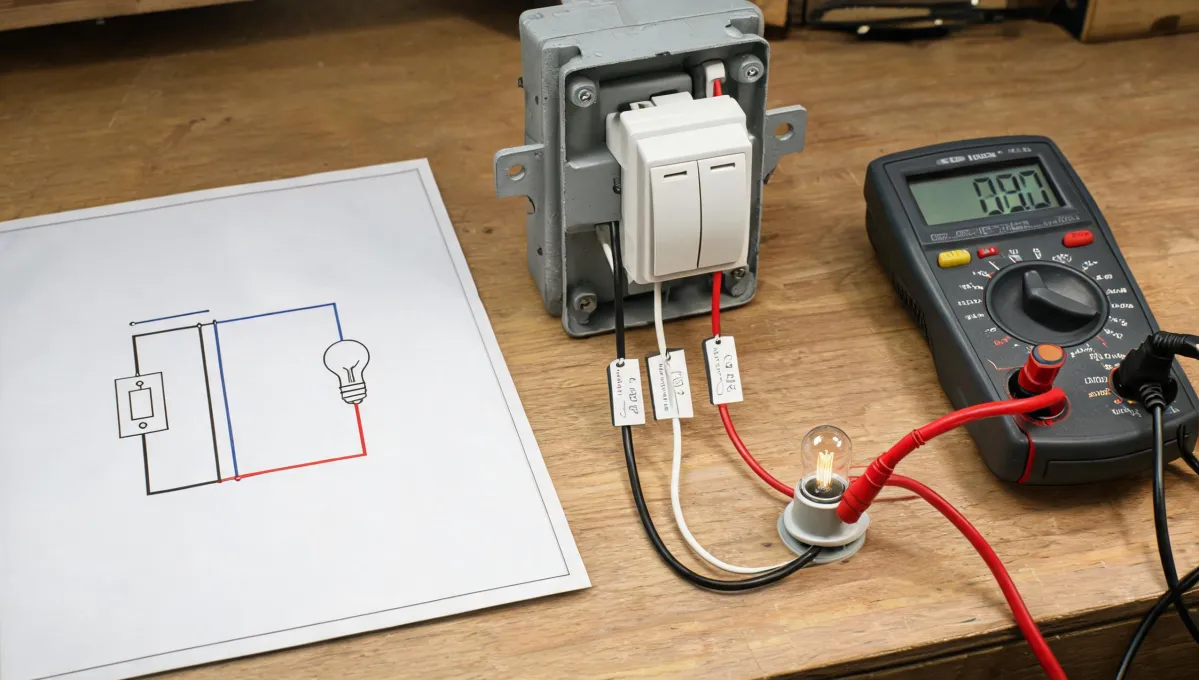
Most buyers check the brand faceplate, then stop. But if the wire terminals behind are loose, the panel will fail down the road. This is the step people overlook most.
For a control panel, I look for:
- torque marks on terminals or a calibration sticker
- wire gauge that matches the circuit breaker rating
- no bare copper sticking out
- terminal screws that are torqued to spec, not just firm
I don't remember the exact torque spec on the batch that failed us, but the point is the terminals weren't torqued. A few years back, we received a panel run where all the Leviton switches were correct, but the neutral terminals were barely finger-tight. Thermal imaging caught the hotspots during a load test. That defect cost us a $22,000 redo and delayed a warehouse rollout. All because nobody looked behind the faceplate before signing off.
5. Demand Test Documentation
Ask for traceable test reports before you commit. For control panels, that usually means a wiring diagram, a production test report, and a declaration that the assembly meets relevant standards like UL 508A (in the US) or IEC 61439 (in Europe). If your supplier says “UL certified,” ask for the actual file number and check the UL Online Certifications Directory.
This is especially important if you are buying private label protectors or breakers. A private label product can be perfectly good—it can also be a generic component with a logo glued on. The underlying manufacturer still matters. I'm not saying avoid private label; I'm saying you need to verify who built it and what it's rated for.
6. Evaluate Their Defect and Return Process
Cost is not just the invoice amount. The real cost includes what happens when something fails. I weigh this against the price difference on every bulk order.
A few years ago, I was tempted by a supplier who was 7% cheaper than our established vendor. The upside was $2,000 in savings; the risk was unproven support. If 2% of units failed, a field replacement trip would wipe out the savings. The expected value said go for it, but the downside felt too real. We went with them anyway—and the worst case happened. That order cost us more than we saved, and the supplier's response time was the opposite of helpful.
Now the first question I ask any new supplier is simple: if we find 3 defective units in a 500-unit order, what happens? If the answer is a clear credit and a corrective action plan, good. If it's vague, that's a warning.
7. Do a Pilot Run Before Bulk Production
This applies to any new combination of product, supplier, and enclosure design. A pilot of ten or twenty panels lets you see the actual packaging, labels, paperwork, and lead time before you commit to thousands. It's slower, I know. But a pilot run has caught real problems in our own process—misprinted UL labels, inverted wire colors, missing torque stickers. All caught before the full run.
There's something satisfying about a pilot run that matches the spec exactly. After the stress of coordination, seeing it arrive correct—that's the payoff.
Final Notes: When This Checklist Is Overkill
Now, when is this checklist overkill? If you're replacing a single wall switch in an existing occupied space, you don't need a pilot run or a factory audit. This is for bulk procurement and for panels that need to meet a safety certification. I'd also say this: the list is not about getting the most expensive option. It's about confirming that the cheap option still meets the core requirements.
There's no such thing as a universally “best” panel supplier. The right supplier for a 200-unit project may be wrong for a 20-unit project, and the opposite is true. If someone tells you their panels work everywhere, ask for specifics. That claim usually falls apart under the first engineering question.
Use the list as a starting point—then adapt it to your own failure history.