
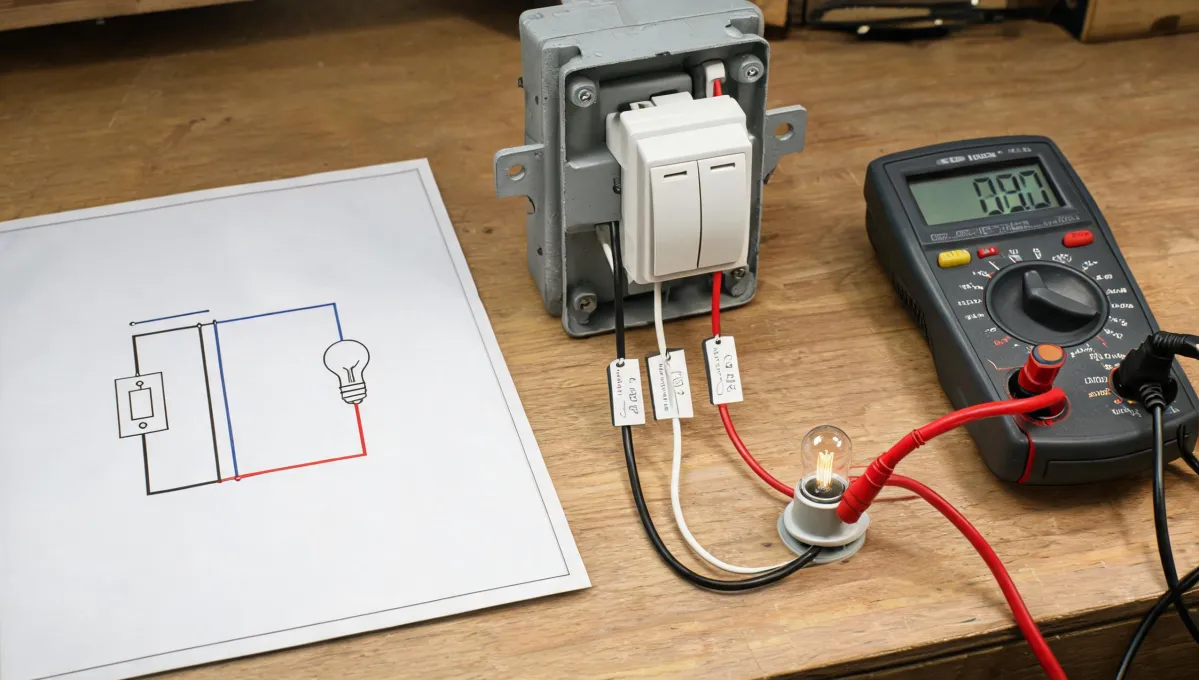
The $1,850 mistake that looked like a good deal
In March 2023, I approved a purchase order for 12 string inverters. The quote was 8% below our previous supplier. The spec sheet matched. The lead time was fine. I signed it in about four minutes.
Six weeks later, those inverters arrived at a project site in northern Spain. The installation crew called me before lunch. The units were configured for a different grid standard. Not a hardware problem—a firmware and certification issue that we hadn't specified clearly enough in the PO. We couldn't commission them. We couldn't return them without a 22% restocking fee. We couldn't swap them fast enough without eating the difference ourselves.
Total damage: roughly $1,850 in rework, expedited shipping, and a very uncomfortable call with the client. Plus a three-day delay I had to explain to my director (note to self: never again approve without a pre-shipment compliance checklist).
That wasn't my first mistake. But it was the one that finally pushed me to document every failure so thoroughly that my team now uses a 14-point pre-purchase checklist on every solar inverter order, regardless of size.
What we thought the problem was
For years, our procurement team believed the root cause of bad solar equipment purchases was price volatility. Solar inverter pricing moves. Panel prices move. Battery storage costs shift. So we shopped around, locked in quotes, negotiated hard.
We were solving the wrong problem.
After logging 31 failed or partially failed orders between 2019 and 2024 (yes, I kept count; the spreadsheet is embarrassingly thorough), a pattern emerged. Price wasn't the primary failure driver. Spec mismatches, certification gaps, and communication breakdowns were. In 22 of those 31 cases, the purchase price was competitive. The total delivered cost—including rework, delays, and administrative overhead—was not.
"The cheapest inverter you buy is never the cheapest inverter you install."
The deeper issue: nobody owns the last 10%
Here's what took me about four years and roughly $14,600 in combined losses to understand clearly:
The solar supply chain is excellent at the first 90%. You can get a quote fast. Specs are published. Certifications exist. Container tracking works.
The last 10%—the part where the inverter actually matches the site, the grid code, the battery charger setup, and the commissioning requirements—that part falls through the cracks because everyone assumes someone else owns it.
The distributor assumes the manufacturer's regional team handles local compliance. The manufacturer assumes the installer verified site conditions. The installer assumes the procurement contact ordered exactly what was specified. And the procurement contact (that was me, in more than one case) assumed the spec sheet covered everything.
It doesn't.
A concrete example: hybrid inverter orders
Take a typical hybrid inverter purchase for a residential solar plus storage project. On a spec sheet, the unit looks straightforward. But in practice, you're also implicitly specifying:
- Grid code and anti-islanding behavior for the specific country and utility
- Battery voltage compatibility and charger profile
- Communication protocol (Modbus, SunSpec, proprietary)
- Firmware version at time of shipment
- Warranty terms by region
That list isn't on the quote. Every item is a potential rework trigger. I've seen a battery charger profile mismatch alone cost a project two days of commissioning time.
Now, when we evaluate brands like Sungrow (the SG110CX being a common model for commercial rooftops), we don't just look at the datasheet. We ask for a pre-shipment configuration confirmation in writing. It's not glamorous. It has saved us at least six rework events since 2023.
What this costs when you ignore it
Industry shipment data tells part of the story. According to Wood Mackenzie's 2023 global inverter shipment report, Sungrow alone shipped over 130 GW. That volume creates a lot of standardization—but it also means when something doesn't match, you're processing returns through a very large machine.
Small errors at that scale become expensive:
- Restocking fees: typically 15–25% of unit cost
- Expedited replacement shipping: often 2–3x standard freight
- Lost labor days: $400–$800 per crew per day
- Client relationship cost: harder to quantify, but real
I'm not a lawyer, so I won't speculate on how warranty disputes play out across borders. What I can tell you from a procurement perspective is that the documentation you collect before the PO goes out determines how much leverage you have after the problem appears.
How I finally stopped making the same mistake
I built a checklist. Not a complicated one. Fourteen questions we answer in writing before any solar inverter, battery charger, or solar generator inverter order gets approved. It includes:
- Region-specific grid code confirmation from the manufacturer
- Firmware version and update policy
- Battery/charger compatibility matrix (for hybrid and storage-linked units)
- Communication protocol compatibility with the site's monitoring system
- Warranty terms in the destination country
And nine more. If I remember correctly, we caught 47 potential issues using it in the first 18 months (memory might be slightly off; the log says 44, actually). Each one had a plausible chance of becoming a return, a delay, or a rework event.
It's tedious. It takes maybe 20 minutes per order. That's not free, but it's cheaper than $1,850.
The part I wish I'd accepted earlier
Small orders deserve the same diligence as large ones. A $2,000 inverter purchase for a small installer trying solar for the first time can fail in exactly the same ways as a $200,000 commercial order. The difference is that small buyers often have less leverage and less cushion for error.
When I was buying for smaller projects back in 2017–2019, I accepted sloppy vendor communication because the order was small. I told myself it didn't matter. It did matter. It mattered to my project, and it probably mattered to the next person those vendors worked with.
So if you're a small installer, a first-time buyer, or someone ordering a single hybrid inverter for a pilot project: the checklist works for you too. The questions are the same. The stakes are proportional.
Systems that seem too heavy for your order size might just be the reason your next order goes smoothly.