
Last February, a property manager in west Houston called me at 6:40 on a Tuesday morning. Grid had been down since roughly 2 a.m. Her building's Kohler 100kW unit had started, run for about ninety seconds, and shut itself off. She'd already left two voicemails with a generator repair company and the earliest window they offered was Thursday afternoon.
She thought the generator was broken.
It wasn't. Nothing was wrong with the alternator, the controller, or the transfer switch. The unit had done exactly what it was programmed to do: protect itself from a condition it had been limping toward for about two years.
I coordinate emergency generator service calls for a commercial electrical contractor. I've handled more than 400 rush calls in six years, most of them in the Houston area after storms, freezes, and the occasional construction-site mismatch. I've been the guy on the phone saying "Thursday" to somebody who needed "an hour ago." And I can tell you that almost every emergency call we run didn't start as an emergency. It started as a line item somebody postponed.
The Failure That Looks Like a Mechanical Problem
Here's what the owner sees: the generator failed. Here's what the service tech sees when he opens the enclosure: a fuel filter that's overdue by 14 months, a battery that's been sitting at 11.8 volts for a month, and a controller log full of low-oil-pressure warnings that nobody ever read because the unit is tested automatically and the results go into a file that gets closed.
From the outside, it looks like a mechanical failure that struck without warning. The reality is that it was a scheduling failure that announced itself for two years in a language nobody was reading.
The repair, once we got parts, took forty minutes. The parts took until Wednesday. The building was on generator bypass — meaning essentially nothing — from Tuesday morning until Wednesday afternoon. In a medical tenant space, that's a regulatory problem. In a cold-storage facility, it's inventory. In that particular building, it was two elevators, a server room on a 20-minute UPS, and a property manager losing her Tuesday.
What's Actually Causing the Shutdown
I want to be careful here, because the obvious answer — "people don't maintain their generators" — is true but useless. Of course they don't. The question worth asking is why a competent facility team would let a $40,000 asset drift into failure. There are three reasons I see over and over, and none of them is laziness.
1. The monthly no-load test gives you confidence you haven't earned
Most Kohler standby units in commercial service run an automatic weekly or monthly exercise. The unit starts, runs for ten or twenty minutes, and shuts down. The log says "exercised: pass." Everybody feels good.
That test tells you the starter works and the battery holds voltage under almost no load. It tells you almost nothing about whether the unit will carry the building. A generator that runs fine at zero load and stalls at 60% load is a completely ordinary failure mode — clogged fuel delivery, a weak transfer switch, a cooling system that only shows its problem when the engine is actually working.
According to NFPA 110, Level 1 emergency power supply systems should be exercised monthly at not less than 30% of the nameplate rating for at least 30 minutes. If your test is ten minutes at whatever the building happens to be drawing, that's not a test. That's a warm-up. (Should mention: a lot of smaller commercial installations fall under Level 2 rules, which are less demanding — but the 30% load principle still applies if you want the test to mean anything.)
2. The technical support channel you never set up
Here's the part of Kohler generator technical support that nobody talks about: it works a lot better when you call it before you need it. The first time a facility manager tries to reach Kohler support is usually four hours into an outage, which is the worst possible time to be learning that your unit's model and spec number are on a sticker inside the enclosure that requires a flashlight and a step ladder.
I've watched experienced techs burn twenty minutes on hold because they didn't have the serial number written down somewhere accessible. I've watched them argue with a support rep about whether a fault code is a sensor issue or a wiring issue, when the support rep would have told them six months earlier that this exact controller had a known firmware update.
The habit that actually saves time: during a normal week, not a crisis, log into the Kohler dealer portal or call the support line and get your unit registered, your serial number documented, and your local dealer's after-hours number saved somewhere that doesn't require the internet. That's a two-hour investment, once. It's the difference between a four-hour repair and a two-day one.
3. The filter you planned to change "next quarter"
This is where I'll lose some readers, because it sounds like a maintenance lecture. It isn't. It's a supply chain observation.
The part that fails first on most diesel standby generators is the fuel filter, followed closely by the oil filter. Not because filters are fragile — because they're the cheapest part on the unit and the easiest to defer. A clogged fuel filter on a standby diesel doesn't usually announce itself; it waits until the engine is under real load and then starves the injection pump at exactly the wrong moment.
And it's not a generator-specific blindness. I was on a site last spring where the same property had a Kubota L3901 running a backup pump, and the oil filter on that tractor hadn't been changed since 2022 — the owner thought it had been. Same story on the service truck parked outside: a 1997 7.3 Powerstroke with a fuel filter that was, if I remember correctly, five years old. I want to say the maintenance log showed 2019, but don't quote me on the exact date. The point is the pattern. A person who defers one filter defers all of them, because the mental category is "stuff that can wait," not "Kohler generator."
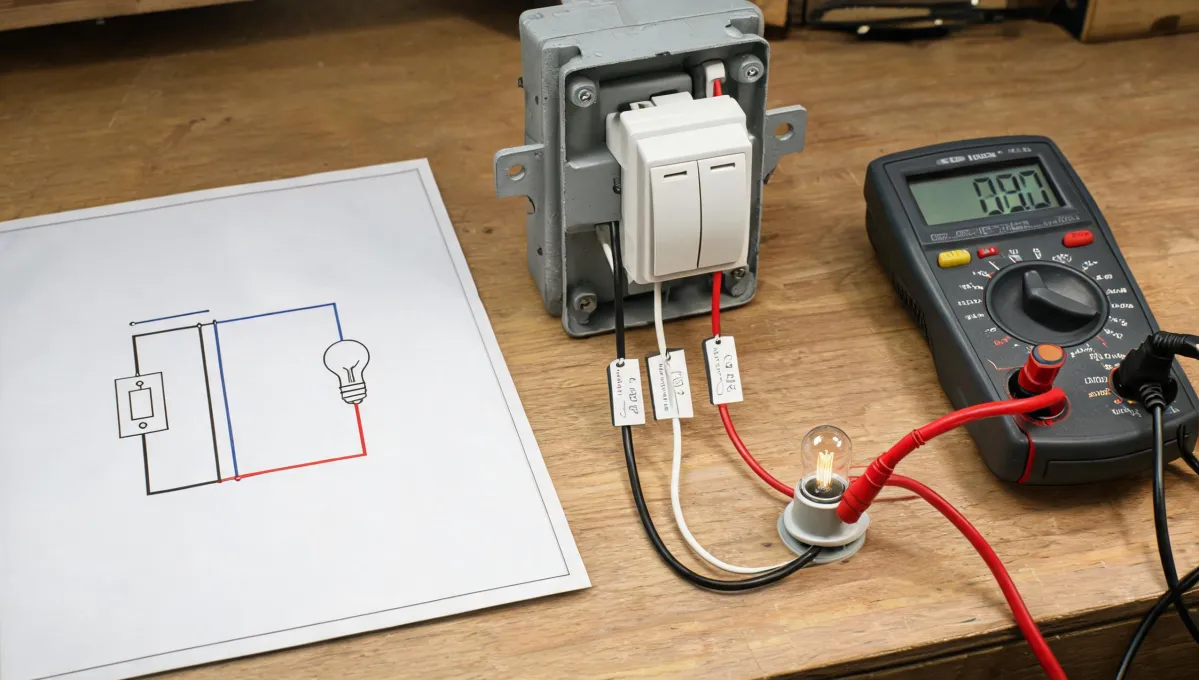
If you want a five-minute version of that habit that at least catches ignition problems early: learn how to test a spark plug with a multimeter. Pull the plug, set the meter to resistance, check between the terminal and the electrode. A good plug reads in the low thousands of ohms; an open circuit or a wildly high reading means replace it. On a gas Kohler unit, doing that once a year during the fall service visit costs nothing and eliminates one of the more annoying no-start scenarios. It won't fix a fuel problem, but it closes a gap.
What an Emergency Kohler Generator Repair in Houston Actually Costs
This is the part that changes behavior, so let me put real numbers on it. The Houston market for Kohler generator repair is not short on technicians. It is short on technicians who can be somewhere in under four hours, because after a regional outage everybody's unit fails in the same 48-hour window.
What that translates into, roughly, from our own dispatch data over the past three years:
- Scheduled service visit: normal labor rate, parts at list, unit back online the same day.
- Emergency call during a regional event: 1.5x to 2x labor, plus a dispatch premium, plus whatever the parts expediting costs. We've paid $400 in expediting on a $180 fuel filter assembly. That's not a typo.
- Downtime cost: wildly variable, but a mid-size commercial tenant space without backup power typically loses between $2,000 and $8,000 per hour in operational impact once you count server rooms, refrigeration, and tenant goodwill.
The math doesn't need a spreadsheet. A $400 expediting fee is cheap relative to a $6,000 hour. The problem is that the $400 fee is only available if somebody is willing to pay it, and the person who's willing to pay it is usually the one who has already lost the hour.
I've been on both sides of that decision. In 2019 I approved a rush delivery on a control board for a client whose unit was feeding a dialysis clinic. The upcharge was $1,200 on a $2,800 part. I spent the two days until delivery mentally re-running the decision. It was correct. It was also the kind of decision I'd rather not make again, because the alternative — the cheaper, slower option — had a downside that was completely disproportionate to the savings.
The Fix Is Boring and Nobody Wants to Hear It
It took me about four years and somewhere north of 250 service calls to understand that almost every emergency we ran had been scheduled, in a sense, eighteen months earlier, by somebody deciding that the filter could wait one more quarter. There's no dramatic reveal here. The fix is three habits:
Test under load, not just to prove it starts. Once a month, at 30% or better, for 30 minutes. Log the result somewhere a human actually reads.
Set up the support channel before you need it. Register the unit, write the serial number down, save the after-hours dealer number offline. Two hours, once.
Treat filters as consumables, not as decisions. Put them on a calendar with a hard date and a small budget line. It's not glamorous. It's also the difference between a Tuesday morning phone call you can handle and one you can't.
The generator that failed in west Houston last February is running fine now. It got a new fuel filter, a battery, and a controller log review. The total repair was under $900. The property manager's Tuesday was not recoverable, but the next one probably will be.