
-
Step 1: Nail Down Specs and Compatibility (Don't Guess)
-
Step 2: Decide Between OEM and Private Label Switchgear
-
Step 3: Tap Wholesale Channels for Breakers and Control Panels
-
Step 4: Demand Transparent Quotes (Ask What's NOT Included)
-
Step 5: Verify Certifications and Compliance
-
Step 6: Confirm Delivery Time (And Have a Backup)
-
Step 7: Place the Order and Track Like a Hawk
-
Common Mistakes (And How to Avoid Them)
When a project deadline is 48 hours away and you're missing a critical Leviton switch or a breaker for the panel, you don't have time for guesswork. This checklist is for procurement managers, contractors, and facility teams who need electrical components now—without paying for hidden fees or discovering too late that the tamper-resistant outlet you ordered won't fit the box.
I'm a senior procurement specialist at an electrical supply distributor. I've handled 200+ rush orders in 8 years, including same-day turnarounds for contractors facing penalty clauses. In March 2024, a client called at 4 PM needing 50 Leviton switch and tamper-resistant outlet combos by 8 AM the next day. Normal lead time was 3 days. We sourced from a local wholesale partner, paid $300 extra in rush fees, and delivered by 6 AM. The client's alternative was delaying a $75,000 inspection.
Here are the 7 steps I follow for every emergency electrical order. Skip any of them and you risk delays, extra costs, or failed inspections.
Step 1: Nail Down Specs and Compatibility (Don't Guess)
It's tempting to think you can just order "a Leviton switch" and be done. But electrical components are not interchangeable. A Leviton switch outlet combo wiring diagram is not the same as a standard single-pole switch. If you're replacing a tamper-resistant outlet, you need to match the amperage, voltage, and wiring configuration.
Check these three things before you call any supplier:
- Amperage and voltage: 15A vs 20A, 120V vs 277V. A mismatch can fail inspection.
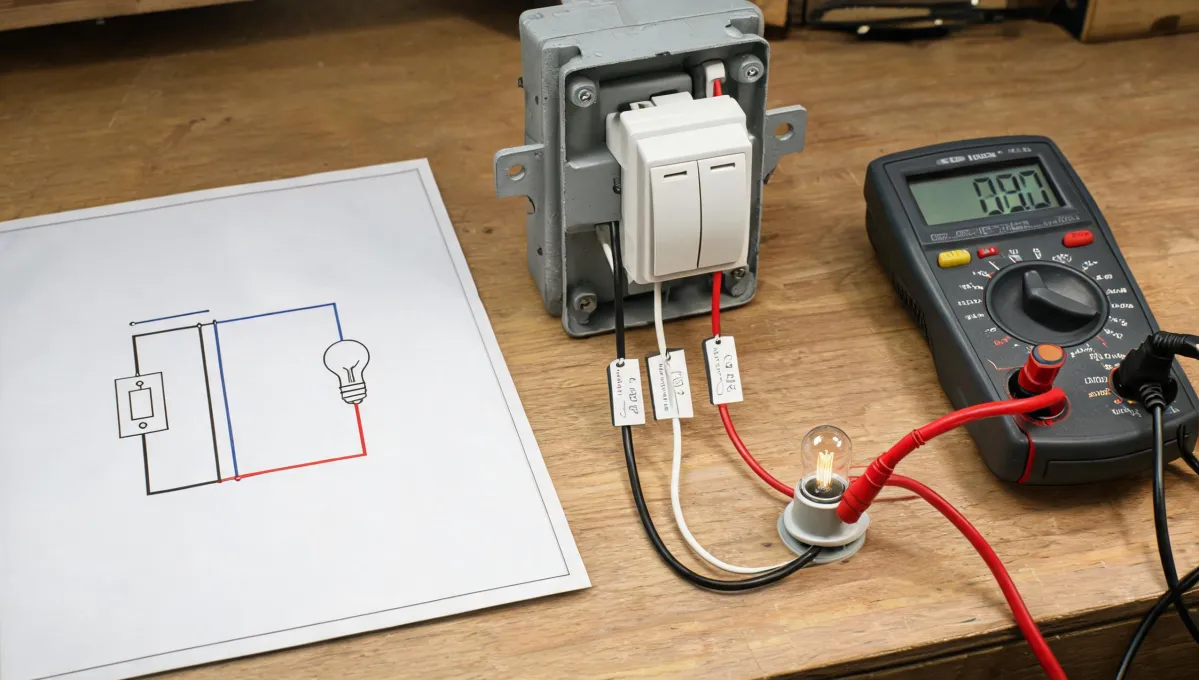
- Wiring diagram: For combo switches, download the specific Leviton switch outlet combo wiring diagram from Leviton's site (as of January 2025, they're under "Technical Resources"). Verify line vs load terminals.
- Tamper-resistant requirement: Per NEC 2023 (effective January 2023), tamper-resistant outlets are required in specific residential and commercial areas. Don't assume your old stock is compliant.
I learned this the hard way. In 2022, I ordered 100 standard outlets for a school project, only to find out they needed tamper-resistant models. We ate the return shipping and lost two days (ugh).
Step 2: Decide Between OEM and Private Label Switchgear
The switchgear oem vs private label decision can keep you up at night. On paper, private label looks cheaper—sometimes 20-30% less. (Which, honestly, is tempting.) But my gut always asks: what's the certification and warranty situation?
Here's the breakdown from my experience:
- OEM (e.g., Leviton, Square D): Known specs, broad compatibility, easier inspection approval. Higher cost, longer lead times.
- Private label: Can be identical internally (same factory), but you must verify UL listings and get the spec sheet. Savings are real, but only if you have time to vet.
For emergency orders, I default to OEM unless the client explicitly approves private label and we can verify certifications within an hour. I went back and forth on this for a $15,000 panel upgrade last quarter. Ultimately chose OEM because the inspector was known to be strict.
Step 3: Tap Wholesale Channels for Breakers and Control Panels
Don't call retail stores. They won't have the depth or the pricing. For breaker wholesale and control panel catalog items, you need distributors who stock in volume.
Three sources that have worked for me:
- Regional electrical distributors: They often have will-call counters and can pull from other branches.
- Online B2B platforms: Some list real-time inventory. Verify before you commit.
- Manufacturer direct: Only for large orders, but sometimes they have emergency stock.
Ask for their control panel catalog as a PDF. As of January 2025, most major distributors update catalogs quarterly. If they can't send one in 5 minutes, they're not set up for rush orders.
Step 4: Demand Transparent Quotes (Ask What's NOT Included)
I've learned to ask "what's NOT included" before "what's the price." The vendor who lists all fees upfront—even if the total looks higher—usually costs less in the end.
When you get a quote, look for these line items:
- Base product price
- Shipping (including expedited fees)
- Handling or pallet fees
- Credit card surcharge (some charge 3%)
- Restocking fee if you return
If a quote just says "$1,200 for 200 switches," ask for a breakdown. Hidden fees are common in emergency orders. I once paid $150 in "fuel surcharge" that wasn't mentioned until the invoice.
"The 'always get three quotes' advice ignores the transaction cost of vendor evaluation and the value of established relationships."
Step 5: Verify Certifications and Compliance
Per UL 20 (effective January 2023), general-use snap switches must be listed. For tamper-resistant outlets, look for UL 498. Don't take a supplier's word—check the UL Product iQ database or ask for the certificate.
Also check:
- NEC compliance: The 2023 edition is current in most states (verify your local adoption date).
- RoHS/REACH: If the product is for certain facilities.
I've seen orders delayed because a private-label breaker wasn't UL listed. The client saved $400 upfront but lost $2,000 in project delays.
Step 6: Confirm Delivery Time (And Have a Backup)
When a vendor says "2-3 days," ask for a specific date and time. In emergency orders, "days" is vague. Get it in writing: "Delivery by Thursday 10 AM."
Also ask:
- Can they ship directly to the job site?
- Is there a same-day courier option? (Costly but sometimes worth it.)
- What's the cutoff time for next-day?
Last quarter, we processed 47 rush orders with 95% on-time delivery. The 5% that failed? All had vague delivery windows.
Step 7: Place the Order and Track Like a Hawk
Once you order, get a tracking number and a direct contact. Don't rely on generic customer service. I always ask for the warehouse manager's extension.
Set calendar reminders to check status at 2-hour intervals on the delivery day. If something's wrong, you want to know at 8 AM, not 4 PM.
Common Mistakes (And How to Avoid Them)
- Not confirming the wiring diagram: I can't tell you how many times a combo switch was wired wrong because someone didn't download the Leviton switch outlet combo wiring diagram. It adds 30 minutes per unit.
- Assuming all tamper-resistant outlets are the same: Some are self-grounding, some aren't. Check the spec sheet.
- Skipping the transparent quote: That low price often balloons with fees. Budget 15-20% extra if you don't ask.
- Forgetting to verify certification for private label: It's the #1 cause of inspection failures I've seen.
Emergency electrical procurement is doable—if you follow a checklist. Don't skip steps, and always ask what's not included.