
There is no single right answer
I’m a procurement manager at a 140-person electrical contracting company. I’ve managed our electrical materials budget ($1.8M annually) for 7 years, negotiated with 50+ vendors, and documented every order in our cost tracking system. When a project manager asks me which Leviton switch or switchgear package to buy wholesale, my first answer is usually: it depends.
Not because I’m dodging the question. Because the buying scenario changes almost everything: the specs, the compliance checks, the lead time risk, and the real total cost. If you skip that step, you can save 4% on unit price and lose 15% on rework, expedited freight, or downtime.
I group most wholesale electrical purchases into four scenarios. Find yours before you send an RFQ.
- Maintenance and replacement stock: standard Leviton switches and tamper-resistant outlets.
- Project spec buying: panel manufacturer selection, switchgear, breakers, transfer switches.
- OEM and private-label sourcing: switch OEM supply with custom labeling or packaging.
- Emergency and break-fix: unplanned downtime where speed beats unit price.
Scenario A: Maintenance and replacement stock
If you’re restocking service trucks, this is the most common scenario. You need Leviton switches, tamper-resistant outlets, wall plates, and maybe a few breakers. The volume is steady, the specs are familiar, and the temptation is to chase the lowest bulk quote.
That’s usually a mistake. For standard maintenance, I care about exact match and first-time-right more than saving a few cents per device. A Leviton switch and tamper-resistant outlet order is not the place to experiment with a different terminal layout or a no-name lookalike unless the customer has approved it.
Here’s the checklist we use before releasing a stock PO:
- Model number, amperage, voltage, and grade: residential, commercial, or industrial.
- Switch type: single-pole, 3-way, 4-way, dimmer, or smart.
- Tamper-resistant outlet requirement for the jurisdiction and application.
- Wall plate match and packaging type: bulk, clamshell, or contractor pack.
- Manufacturer or distributor wiring diagram on file for the exact SKU.
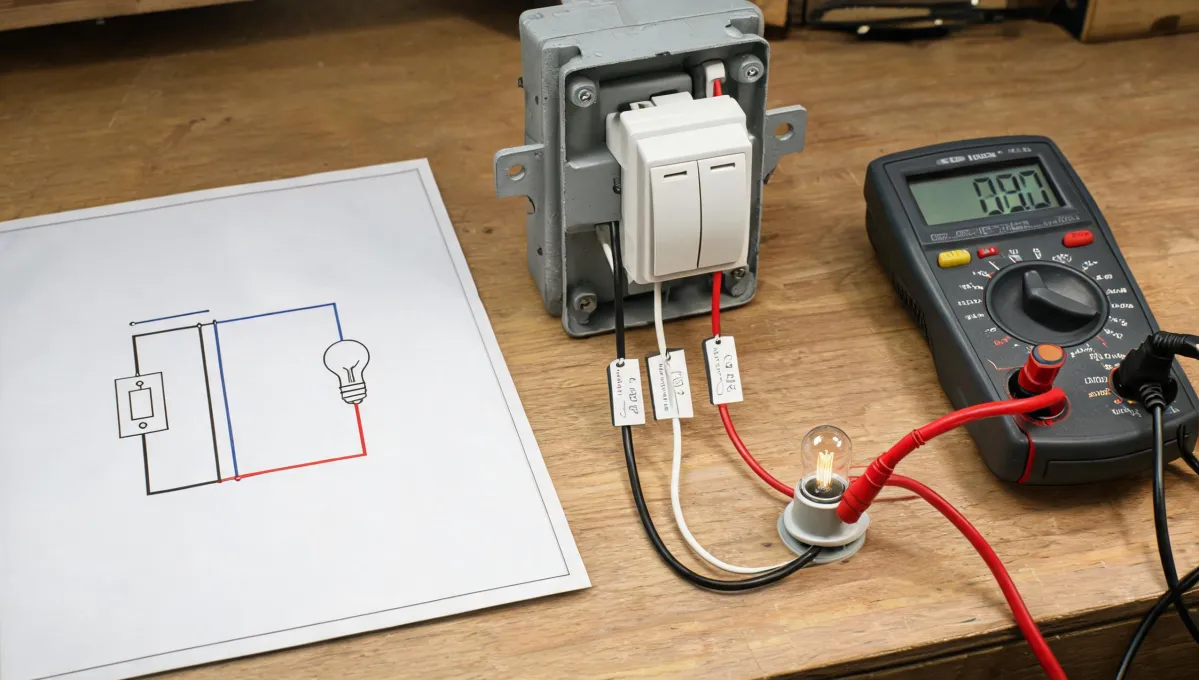
The Leviton switch wiring diagram step is not optional. I know that sounds basic. But in Q2 2024, we skipped it on a 3-way switch order because it was basically the same as last time. It wasn’t. The traveler terminal layout had changed. That mistake cost us $1,400 in return freight and a re-order. The correct diagram would have shown the difference in 30 seconds.
5 minutes of verification beats 5 days of correction. Specs confirmed, certifications verified, lead time locked. In that order.
Scenario B: Project spec buying and switchgear wholesale
This is where cost control gets more complex. You’re not buying a box of switches. You’re buying a panel, switchgear, breakers, and possibly a transfer switch. The spec book may be 80 pages. The panel manufacturer matters. The switchgear assembly has to coordinate with the upstream protection and the available fault current.
When people ask me how to choose switchgear for wholesale, I start with TCO, not unit price. The lowest quote often isn’t the lowest total cost. My TCO model for switchgear includes:
- Base equipment price and any options.
- Compliance documentation, UL listing, and available short-circuit current rating.
- Lead time and schedule risk.
- Freight, rigging, and storage.
- Startup support, warranty terms, and spare parts availability.
- Rework risk if the assembly doesn’t match the spec or the AHJ rejects it.
According to NEMA (nema.org), switchgear and panelboard selection should follow applicable UL standards and local AHJ requirements. For the exact assembly, verify the UL listing—typically UL 891 for switchboards or UL 67 for panelboards—and confirm the SCCR and breaker coordination with a licensed engineer.
In 2023, I compared three vendors for a $42,000 switchgear package. The lower quote was $3,200 less, but it carried a 10-week lead time versus 6 weeks from the higher quote. We calculated downtime exposure and expedited freight, and the faster quote ended up $5,800 cheaper on TCO. The saving was hidden in the schedule.
One more thing: don’t assume a panel manufacturer’s catalog number is enough. Confirm the enclosure type, bus rating, breaker family, and whether the assembly is suitable for the available fault current. That’s prevention, not paperwork.
Scenario C: OEM and private-label switch sourcing
This scenario is different. You’re not buying Leviton-branded stock. You’re sourcing switch OEM production, private-label packaging, or a custom SKU. The unit price can look attractive, but the real cost sits in tooling, minimum order quantities, certification responsibility, and quality control.
The vendor says flexible. What I mean is they’ll negotiate MOQ if you commit to annual volume. That can work, but only if you control the spec and the compliance trail.
For switch OEM projects, I use a pre-production checklist:
- Approved sample with measured dimensions, materials, and terminal torque specs.
- Certification plan: who holds the UL or ETL listing, and what file number applies?
- First article inspection and ongoing lot testing.
- Traceability: date codes, batch records, and change notification process.
- Packaging, labeling, and warranty terms in writing.
Honestly, I’m not sure why some OEM vendors quote 6-week tooling and then deliver in 4, while others quote 4 and deliver in 8. My best guess is internal buffer and component availability. If someone has insight, I’d love to hear it. Either way, build schedule buffer into the TCO.
The cheapest OEM quote I ever reviewed looked great until we added cert testing, first article inspection, and a $6,000 tooling change. Private-label electrical products can be a good fit—but only when the specs and certifications are verified before the first production run.
Scenario D: Emergency and break-fix buying
This is the one where the normal cost-control rules flip. If a hospital, data room, or production line is down, the cheapest switch is the one that arrives today and matches the spec. A $40 savings on a breaker is irrelevant if downtime costs $2,000 an hour.
In an emergency, I still verify three things before I approve the premium:
- Compatibility with the existing system—voltage, amperage, interrupt rating, and physical fit.
- Certification and listing status for the exact unit.
- Delivery confirmation in writing, not should ship today.
That last point matters. I knew I should get written confirmation on a rush order deadline, but thought we’ve worked together for years. That was the one time the verbal agreement got forgotten. We paid a premium and still missed the window. Now our policy requires a confirmed tracking number or a written dispatch commitment before we release emergency payment.
Emergency buying is not an excuse to skip prevention. It’s the reason prevention matters. Keep a small critical-spares stock for the items that cause the most downtime. That’s the cheapest insurance you can buy.
How to tell which scenario you’re in
Use these questions before you request quotes:
- Is this planned work or unplanned downtime? Planned work goes to Scenario B or C. Unplanned downtime goes to Scenario D.
- Are you buying branded stock or building your own SKU? Branded stock is Scenario A or B. Custom labeling or packaging is Scenario C.
- Is the assembly going into a permitted installation? If yes, compliance, UL listing, and AHJ approval move to the top of the checklist.
- What is the cost of a wrong part? If a wrong part stops a job or a production line, pay for verification. Every time.
My simple rule: if downtime costs more than $500 per hour, you’re in Scenario D. If there’s a spec book, you’re in Scenario B. If it’s standard service stock, you’re in Scenario A. If your company’s name goes on the product, you’re in Scenario C.
The 12-point checklist I created after my third mistake has saved us an estimated $8,000 in potential rework. It is not glamorous. But prevention beats cure, especially when the cure involves expedited freight, angry customers, and a schedule you can’t get back.
Prices and lead times change constantly. Verify current pricing, availability, and compliance requirements with your distributor and the AHJ before ordering. This article is general guidance, not a substitute for engineering review.