
-
What does a Leviton switch actually cost when you're buying in bulk?
-
Leviton switch and tamper-resistant outlet — do I need both, or is it overkill?
-
How reliable is the Leviton switch wiring diagram that comes in the box?
-
What should I look for in a protector supplier?
-
How do you read a switchgear catalog without getting burned?
-
Where do switch wholesale costs actually hide?
-
Is there anything about 2025 that changes how I should buy?
I've spent the last six years managing electrical component procurement for a mid-size contracting outfit. In that time I've processed 400+ orders, run quotes through 11 different suppliers, and built a TCO spreadsheet that my team now refuses to work without. This FAQ covers the questions I actually get asked — by junior buyers, by GCs, and occasionally by my own boss at 7 a.m. on a Monday.
What does a Leviton switch actually cost when you're buying in bulk?
Depends entirely on the tier. Residential-grade toggle switches run $0.80–$2.50 per unit at wholesale volume (500+ pieces). Decora-style runs $1.50–$3.50. Tamper-resistant receptacles sit around $2.00–$5.00. Smart switches? $25–$60 per unit, and the spread between suppliers is brutal — I once saw a 40% variance on the same model number from two distributors quoting the same week.
These are publicly listed ranges as of January 2025. Verify before you commit — copper pricing moves, and 2024 had two mid-year corrections that caught a lot of buyers flat-footed.
The bigger issue: unit price is not your cost. More on that below.
Leviton switch and tamper-resistant outlet — do I need both, or is it overkill?
If you're wiring residential, you don't have a choice. NEC 2023 (NFPA 70), Article 406.12 requires tamper-resistant receptacles in all dwelling units — including replacements in existing homes. This isn't a recommendation. It's code.
There's a subtle thing most buyers miss: TR receptacles must be installed in place of non-TR receptacles when you're replacing them in a residential setting. You can't just swap in whatever's on the truck. I've seen supply houses push non-TR stock because it's cheaper and they're clearing inventory. Don't take it.
Commercial? Different story. TR isn't required in most non-dwelling occupancies unless local amendments say otherwise. If you're running a mixed-resi-commercial job, keep two SKUs. Trust me.
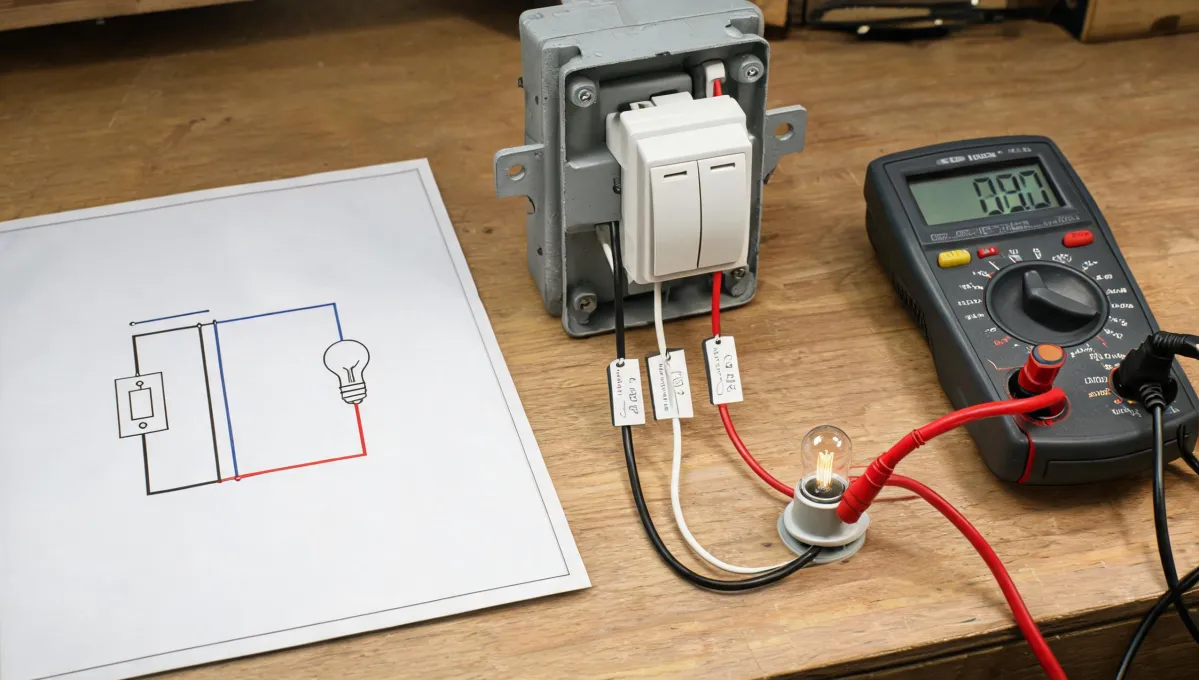
How reliable is the Leviton switch wiring diagram that comes in the box?
For single-pole and 3-way switches, the included diagrams are fine. For 4-way and anything involving a smart switch with a neutral, I'd say the box diagram covers about 80% of real-world installs. That last 20% — loop circuits, switch-leg configurations, older wiring with no neutral — that's where installers call and ask, and someone on my end has to walk through it.
Three things I always tell our electricians:
- Photograph the existing wiring before you disconnect anything.
- The diagram assumes standard color coding. Assume older buildings don't follow it.
- Smart switches almost always need a grounded neutral. Verify before you buy 200 of them.
Annoying? Yes. But the alternative is a call-back, and a call-back costs more than the switch.
What should I look for in a protector supplier?
Whether you're sourcing surge protective devices, motor protectors, or GFCI/AFCI devices — three things:
- UL listing. Not "UL recognized." Listed. SPDs should carry UL 1449. Switches and receptacles under UL 20 and UL 498. If a supplier can't produce the file number, that's your answer.
- Response time specs — with test methodology. If the datasheet lists "<1 nanosecond" without saying how it was measured, they're quoting marketing copy, not engineering data.
- Replacement policy in writing. I had a supplier promise "hassle-free warranty" verbally. When it came time to actually claim it — $1,400 in devices — we got a 6-week runaround. No more verbal agreements. Written, in the PO.
Here's the honest limitation: the cheapest protector on the market probably works fine for 90% of applications. But if you're protecting critical equipment, the 10% case is what matters. Match the protector to the consequence of failure, not to the lowest line item.
How do you read a switchgear catalog without getting burned?
Most switchgear catalogs are organized by product family, not by what you actually need to decide. That's backwards for a buyer. What I check first:
- Interrupting rating (kAIC) — is it listed per voltage, or just one number?
- Enclosure type (NEMA 1, 3R, 12, 4X) — determines whether it survives the environment you're installing it in.
- Available accessories — if breakers and lugs are listed separately, your "quoted price" is missing line items.
- Lead times — stated, not implied. Ask for current lead times in writing.
One thing I've learned the hard way: a catalog listing is not a quote. I've had three suppliers this year update pricing between the catalog PDF and the formal quote. Usually upward. Sometimes by 12–15%.
Where do switch wholesale costs actually hide?
This is the part nobody puts in the brochure.
Freight. Palletized switch orders from a regional distributor often add 4–8% to the landed cost. Quoted DDP? Confirm it means what you think it means.
Minimum order penalties. Placing a small order below MOQ usually triggers a 10–20% surcharge. We've restructured some orders around a quarterly cadence just to avoid this.
Age of stock. Older stock from slow-moving SKUs sometimes shows up with dried-out packaging, brittle clips, or fasteners missing. It's not a defect — it's the cost of buying the cheapest bin.
Return restocking fees. Commonly 15–25%. If your job scope changes, those unopened boxes aren't 100% refundable.
I built our current cost calculator after getting burned on hidden freight twice in a single quarter. The numbers said Vendor A was 11% cheaper. My gut said something felt off — their quote had no line-item freight. Went with Vendor B at a slightly higher unit price. Turns out A's "free shipping over $2,500" wouldn't have covered our LTL shipments. We would've paid about $600 more in the end. Not catastrophic, but that's exactly how TCO drift happens.
Is there anything about 2025 that changes how I should buy?
Two things I've noticed in our own purchasing data:
First, lead times on switchgear and control panels have stretched compared to 2023. What used to be a 4–5 week specialty order is now often 8–10 weeks. Plan around it, or pay for expedited — which, in case you're wondering, adds roughly 30% to the order value in my experience.
Second, more suppliers are pushing allocation-style pricing on high-demand SKUs. That means quotes are valid for shorter windows. If you get a quote you like, don't sit on it for two weeks.
Best part of finally getting our vendor process systematized? We stopped paying surprise freight. That alone saved us $4,100 across 2024 — call it 3.5% of our annual electrical supply budget. Not glamorous, but real.
Bottom line: build the TCO, verify the certifications, and don't let unit price talk you out of arithmetic. Simple. Just rarely done.