Start with the uncomfortable part: there is no universal Schneider UPS answer
I've been handling UPS and power-protection orders for facility and IT teams for 11 years. I've personally made and documented nine significant mistakes, totaling roughly $23,000 in wasted budget. Now I maintain our team's pre-purchase checklist to keep other people from repeating my errors.
If you searched for schneider-ups, Schneider Electric Legrand smart UPS reviews, how come rob schneider wasn't in grown-ups two, where is my air filter, ctek battery charger, or how to replace circuit breaker, I need to be blunt: only part of that list belongs here. UPS selection is a load, runtime, and service question. The rest is either maintenance-adjacent or a different rabbit hole. I will not fake a connection.
No single UPS topology, runtime, or service plan is right for every site. The decision depends on measured load, growth path, and who is legally allowed to touch the electrical panel.
Here are three scenarios I use when someone asks which Schneider UPS to buy. I am not saying Schneider is always the answer. I am saying match the topology and service model to the scenario, then verify the current listing, firmware, and support terms as of April 2025.
Scenario A: one rack, small order, first UPS
This is the 600VA to 3kVA range, often a single rack with a switch, router, server, and maybe a small storage unit. The mistake I made early was buying on brochure wattage instead of measured load. Measure the actual load with a meter or the UPS display, then add realistic headroom. Do not buy the biggest unit you can afford and assume you are safer. Oversizing can lower operating efficiency and can make your runtime math less useful. Simple.
Everything I'd read said online double-conversion is the only serious choice. In practice, for a one-rack closet with clean power and non-critical load, a well-specified line-interactive unit can be defensible. To be fair, online double-conversion is still the right call for lab, medical, or dirty-power sites. The point is not to pick a tribe. The point is to match the load.
Runtime is not a spec you can wave at. Decide what you need the load to ride through: a 10-minute safe shutdown, a 30-minute bridge to generator, or a full outage. Then check the battery replacement interval and whether the battery is internal or external. A cheap UPS with an odd battery form factor can cost more over five years than a slightly pricier unit with standard batteries.
Small order does not mean small service. Ask for battery date codes, firmware version, commissioning notes, and a named support path. When I was starting out, the vendors who treated my $200 orders seriously are the ones I still use for $20,000 orders. That is why I push back when a small buyer gets told to just take whatever is in stock.
If you are reading Schneider Electric Legrand smart UPS reviews, use them as starting points, not proof. Reviews rarely tell you whether the unit matches your load profile, battery replacement path, or bypass needs. A smart UPS is only smart if you can read the data and act on it.
Scenario B: modular data center or room with growth
This is where modular UPS, N+1, service bypass, battery monitoring, and commissioning matter more than a single kVA number. Schneider Galaxy-class systems and APC by Schneider Electric heritage are relevant here, but heritage is not a commissioning report. I have seen a modular quote look clean on page one and fall apart on page four because the bypass and monitoring scope were vague.
When I compared two quotes side by side, same nominal kVA, different service bypass and battery monitoring, I finally understood why the cheaper quote was not cheaper. One assumed every future service event would be a full shutdown. The other let us isolate a module without dropping the load. That difference does not show up in a headline price.
Modular is not automatically better. If you have no growth and no service contract, a modular system can add complexity you will not use. The opposite is also true: a fixed UPS in a room with four planned expansions is a future service headache. Ask what module size you can actually add and what happens when one module fails.
What most people do not realize is that standard lead time often includes buffer time that vendors use to manage their production queue. It is not necessarily how long your order takes. If you are planning a cutover, ask for the production slot, the shipping window, and the commissioning window separately. Then write them down. I learned that after a September 2022 replacement where the UPS arrived on time and the electrician did not.
For this scenario, require a real commissioning checklist: input voltage and phase rotation, battery install and torque checks, firmware baseline, monitoring alarms tested, bypass transfer tested, and a named escalation path. UL 1778 listing is a baseline, not a finish line. As of April 2025, verify the current firmware release notes and support terms at the vendor documentation page. Do not rely on a 2021 review for a 2025 deployment.
Scenario C: legacy replacement, breaker work, and the searches that do not belong
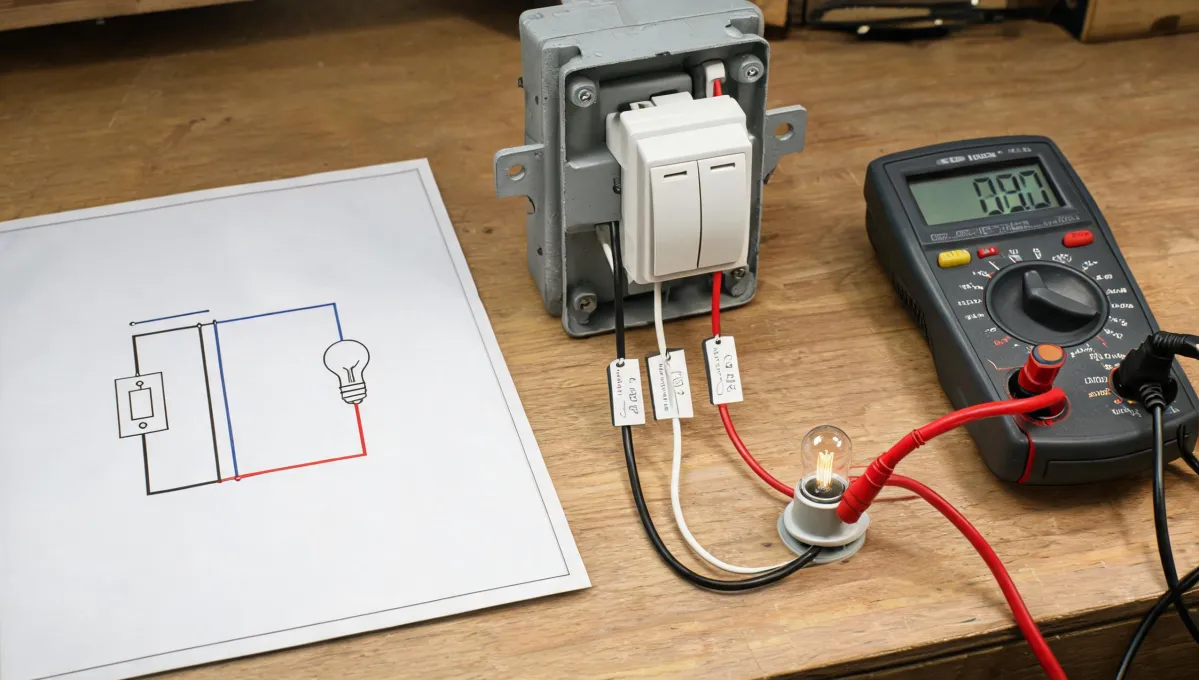
If your search was how to replace circuit breaker, this is the only keyword on your list that touches this article, and only at the boundary. Replacing a breaker feeding a UPS is not a DIY UPS task. It is electrical work. NFPA 70, the NEC, and NFPA 70E arc-flash requirements apply, and your insurer and local authority will care who did the work. Lockout and tagout, upstream coordination, and a licensed electrician are not optional decoration.
The UPS does not make the panel safe. It makes the panel more complicated. If you are replacing a breaker upstream of a UPS, you need a bypass plan and a written sequence. I once watched a team assume the UPS output was isolated because the display said so. It was not. That mistake cost a service call and a lot of embarrassment. Now I ask for a one-line diagram before anyone opens a panel.
Also, a ctek battery charger is for automotive and leisure batteries, not a UPS string charger. Do not clip one onto a VRLA string and call it maintenance. For stationary battery maintenance, follow IEEE 1188 practices and the battery manufacturer's instructions. And if you searched where is my air filter, that is a cooling and maintenance question for the room, not a UPS firmware question. Keep the air path clean, but do not confuse a clogged filter with a battery failing.
And yes, if you searched how come rob schneider wasn't in grown-ups two, that is not a power-protection issue. I will not fake a connection. Different rabbit hole.
How to tell which scenario you are in
Answer four questions before you ask for a quote:
- What is the measured load in watts, not just the nameplate VA?
- Do you expect to add racks, servers, or cooling loads in the next 24 months?
- What does one hour of downtime cost, and is it safety-critical or revenue-critical?
- Who is allowed to open the panel, and do you have a bypass path?
If it is one rack with a measured load and no growth plan, you are likely Scenario A. If you have growth, redundant modules, or a room-level load, you are likely Scenario B. If the work touches a panel, a legacy breaker, or a live electrical room, you are in Scenario C even if the UPS is small. When two scenarios overlap, treat it as the higher one and get an electrical review.
If you are a small buyer, say so. A good vendor will not punish you for a small order, but you have to ask for the same written scope. If the response is just a price and a lead time, that is not a proposal. That is a guess.
My final checklist is boring on purpose: confirm the UL 1778 listing, battery date codes, firmware baseline, commissioning scope, bypass plan, and support escalation. As of April 2025, verify current specs and release notes with the vendor. Then write the sequence down. That checklist has caught 47 potential errors in the past 18 months. The first quote is almost never the final scope. Trust the checklist, not the brochure.