
-
Why a wiring diagram search is usually a code problem
-
The deeper reason: compatibility is invisible
-
The Leviton switch and tamper resistant outlet details that don't show up in an image
-
Fuse sourcing is the same story with a different enclosure
-
What to look for in a control panel supplier
-
What skipping verification actually costs
-
The practical fix, briefly
Why a wiring diagram search is usually a code problem
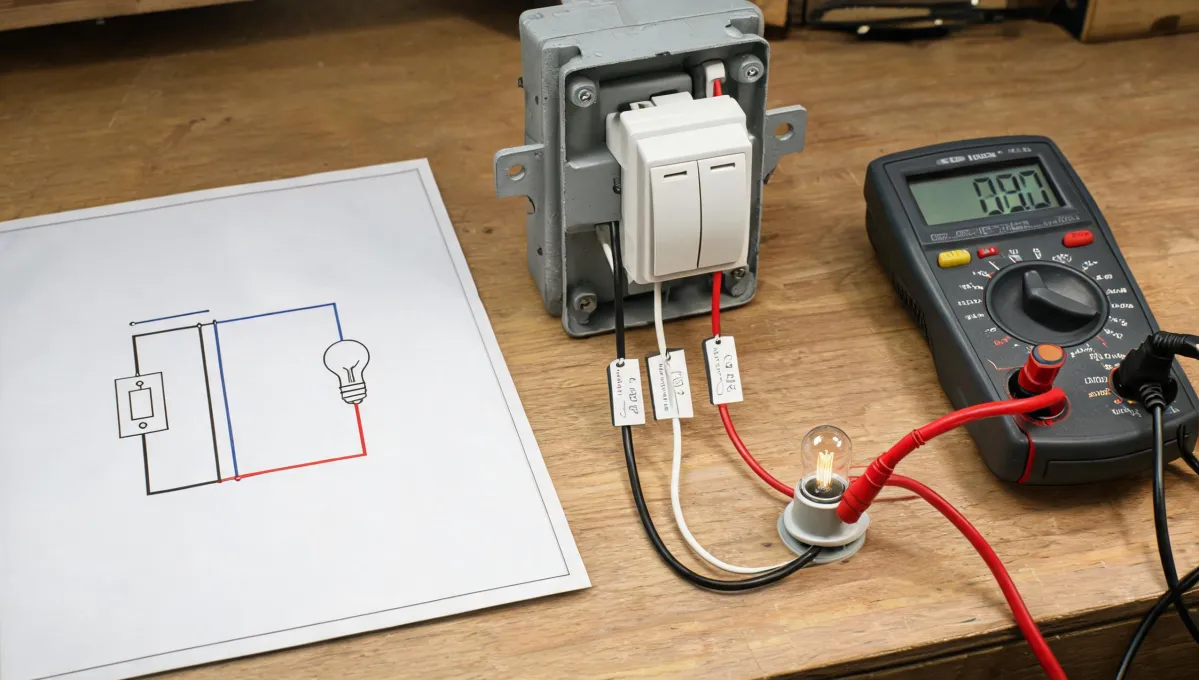
When someone searches for Leviton switch outlet combo wiring diagram, I can usually guess what led to it. The device didn't work. The inspector flagged it. The drywall is still open. And now they are looking for one drawing that will make the problem go away.
A drawing might help. But I work with electrical products for a living, and the same pattern shows up far beyond a wall box. The wiring diagram search is not the real problem. The real problem is that electrical products get treated as interchangeable parts until they are not.
The deeper reason: compatibility is invisible
My perspective comes from quality and compliance work. I review incoming documentation and outgoing orders for an electrical supply company. That means checking catalog numbers, listing labels, spec sheets, and sometimes photographs of the actual parts. It is roughly 200 unique line items per week. Not the biggest sample in the industry, but big enough to see patterns.
In our 2024 audit, I rejected about 11% of first-article samples from new suppliers. Most were not visibly broken. The label just did not match the supporting data. That is the part that surprises people. Electrical compatibility is not something you can see. A fuse looks like a fuse. A switch looks like a switch. A tamper resistant receptacle looks like a normal receptacle. The difference is internal and documented, so you either verify it or you guess.
That is why I am picky. I have been burned on the guessing side, and it changed how I review things.
The Leviton switch and tamper resistant outlet details that don't show up in an image
A Leviton switch and tamper resistant outlet is a practical product. It gives you two functions in one wall box opening, which matters in tight renovations and jobs where wall box space is limited. But it is still a combination device. The catalog number matters. The installation sheet matters. The branch circuit and wiring arrangement matter.
Many combination devices have a hot-side tab that connects the switch section to the receptacle section. In a single-feed installation, that tab is useful. In a two-feed installation, where the switch and receptacle come from separate circuits, the tab should be removed. If it is left intact, you are tying two hot conductors together through the device. That is not a terminal position issue. It is an installation mistake that a generic diagram can easily miss.
I am not going to publish another generic Leviton switch outlet combo wiring diagram here. The correct diagram depends on the exact catalog number and the circuit plan for that box. The manufacturer's instruction sheet for the exact model is the source I trust. A random image result may show an older generation or a different function layout.
The tamper-resistant feature is another reason to pay attention. Since the 2008 NEC introduced the tamper-resistant receptacle requirement, it has become a baseline in many dwelling-unit spaces and similar occupancies. That does not mean every device in every building needs shutters. It means the phrase tamper resistant is not a feature you skip when the code applies.
The same precision applies to a Leviton switch. If the circuit needs a three-way switch and the stockroom sends a single-pole switch, no diagram will fix it. It has to be uninstalled and corrected. That is the boring version of quality.
Fuse sourcing is the same story with a different enclosure
Fuse sourcing sounds nothing like a wiring problem. You need fuses, you find a fuse supplier, compare quotes, and place the order. The dangerous step is stopping there.
A fuse is an intentional weak point in a circuit. It has to carry normal current without nuisance trips and still open fast enough when a real fault occurs. That means fuse class, current rating, voltage rating, interrupting rating, and time-current response all matter. The fuse can look exactly like the old one and still have a different interrupting rating.
In our 2024 audit, a prospective fuse supplier sent a sample with one interrupting rating marked on the label and a different value in its own documentation. The product was not obviously bad. On a normal day, it probably would work. On a fault day, the consequences would be entirely different. We rejected it.
What I expect from a fuse supplier is not the lowest quote first. I expect the catalog page, the datasheet, and traceable lot information. If a supplier says they have been selling those fuses for years, that helps, but the file still needs to show the rating. Years of no problems and a single undocumented fault are not the same risk. Maybe I am too cautious. The last time I was too cautious, I postponed a shipment for 24 hours. The last time I was not cautious enough, I approved a panel submittal that should not have been approved. I would rather postpone the shipment.
What to look for in a control panel supplier
If fuse sourcing is component-level diligence, a control panel is assembly-level diligence. The larger risk is not one bad fuse. It is a panel that does not work as a system.
What to look for in a control panel supplier, in one line, is traceability. Ask what assembly standard the panel is built to. Ask how the panel's overall rating is supported. Ask whether the builder has considered the available fault current at the installation point. In North America, many industrial control panels are built to UL 508A. That is not a brand preference. It is a recognition that a panel is an assembly, not a bin of components.
A clean enclosure with name-brand breakers is not enough. I have reviewed panels that looked excellent and still had the wrong wire-bending space, missing separation between power and control wiring, or no clear short-circuit current rating. Those problems are invisible until an inspector or an event finds them.
What skipping verification actually costs
The easiest way to see the cost is to multiply a small mistake by a large order. If the wrong Leviton switch gets installed in 200 rooms, you have 200 callbacks, not one. If the wrong fuse gets built into 50 panels, you have 50 potential failures. If the control panel supplier cannot prove the assembly rating, you have a delay while everyone argues about paperwork.
A few years ago, we found a documentation mismatch on 600 fuses headed for a customer. We stopped the shipment, the replacement fuses had to be expedited, and the project lost a week. The price difference that led the customer to that fuse source was nowhere close to the cost of that week. Nobody got hurt. Nothing burned. It was an expensive, avoidable delay.
The practical fix, briefly
Here is the short version. It is not exciting, but it works.
- Use the exact catalog number. On a Leviton switch, the description should include switching function, color, amperage, and any special features. If the number is not exact, stop.
- Use the manufacturer's installation instructions for that model. The diagram included with the product is better than a random image because it matches the product in your hand.
- For any fuse sourcing decision, ask for the fuse datasheet, time-current curve, and listing evidence before you buy.
- When you evaluate a fuse supplier, treat documentation as part of the deliverable.
- When you evaluate a control panel supplier, require a clear assembly standard and a traceable rating. If they cannot describe it, find another supplier.
- Then compare price. The lowest quote is only meaningful when every other variable has been held equal.
My experience is mostly U.S. distribution and commercial replacement projects, in the 15 A to 600 A range. If you are doing utility-scale switchgear in another country, your standards and application details will be different. The verification principle is not.
A wiring diagram can fix a wiring mistake. It cannot fix a sourcing process built around first price. The items that pass inspection and survive faults are the ones where someone verified the invisible details before installation. That is the work. It is worth doing before the wall closes.