
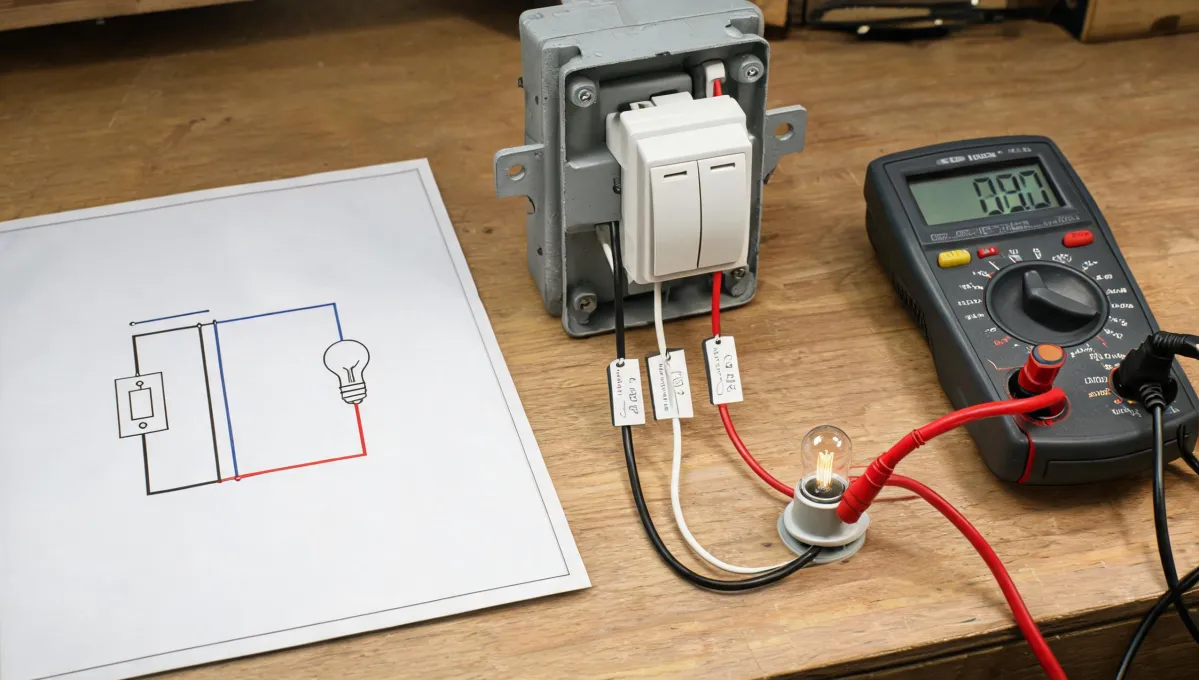
I have handled wholesale electrical orders for seven years—since 2018, give or take a few months. That is long enough to make mistakes, repeat a few, and document all of them. I count 14 significant ones so far, totaling roughly $39,000 in restocking fees, return freight, rushed reorders, and lost credibility. Not one of those orders involved counterfeit parts. The equipment was certified, the suppliers were legitimate, and the part numbers were real. The problem was my purchasing logic.
I kept asking the same wrong question: what is the correct product? The better question—and the one this article is really about—is what is this product doing, where is it going, and under what constraints? I did not learn that from a webinar. I learned it the hard way, starting with a search I made in 2021: how to choose circuit breaker for wholesale.
Why Wholesale Changes the Circuit Breaker Question
Most advice on choosing a circuit breaker is consistent: match the voltage, count the poles, check the continuous current rating, verify the interrupting rating, and confirm the physical size. That advice works fine when you are replacing a breaker in a panel that is sitting in front of you.
But wholesale does not mean taking that same logic and applying it to a larger quantity. Wholesale means putting a breaker on a shelf before anyone knows exactly which panel it will go into. A contractor who picks the wrong breaker has one problem at one jobsite. A distributor who selects the wrong breaker has a pallet of them, a stack of backorders, and a longer memory of unhappy electricians. The same multiplication applies to every product category.
There is another layer. A circuit breaker is not an independent device; it is part of a tested assembly. The panelboard label says which circuit breakers are allowed in that enclosure at that short-circuit current rating. When you buy an alternate or less expensive breaker for wholesale stock, you are substituting a product into an assembly you have not seen and may not even know about. That is not automatically unsafe, but it is not a product decision. It is a coordination decision. The failure I have seen, and caused, comes from treating coordination as a catalog filter. NEC 110.9 is the reference point that finally made this real for me: equipment intended to interrupt current at fault levels must have an interrupting rating sufficient for the available fault current. But that rating only exists when the right components are used together.
So when someone asks how to choose circuit breaker for wholesale, my honest answer now is: first find out what kind of installation it will serve. The part number is the last thing you choose, not the first.
The Leviton Switch and Tamper Resistant Outlet Lesson
My clearest example has nothing to do with breakers. It is about a Leviton order from my first year. A property owner's purchasing agent sent a request for apartment units. The request listed switches in one section and tamper resistant outlets in another, but the note underneath read simply: Leviton switch and tamper resistant outlet.
I read that as one product. In my head, a Leviton switch outlet combo was the efficient answer. One device, one gang, one installation. What could go wrong?
Plenty. The apartment plan called for a wall switch controlling a ceiling light in one location and a tamper resistant outlet on another wall. A combination device cannot be in two places. It was a good product, but it was not the order. The savings I promised disappeared into restocking fees, return freight, and a rushed replacement shipment. The total waste on that order was close to $3,800, not counting the embarrassed phone call I had to make.
The tamper resistant part mattered too. Tamper resistant receptacles have been required in dwelling units under NEC 406.12, and the requirement has expanded in later editions to cover guest rooms in hotels and motels. A standard receptacle would not have satisfied the code. But here is the uncomfortable part: the code requirement only helps if the receptacle is in the right location. I had the right safety feature on the wrong device, in the wrong place, solving the wrong problem.
Why I Needed a Wiring Diagram at All
A second Leviton mistake happened in 2022. That time, the customer genuinely needed combination devices, and I found myself typing Leviton switch outlet combo wiring diagram into a search box. The diagram was clear. It showed the line terminals, the load terminals, the neutral connection, and the little tab that changes how the device behaves.
The diagram did not show what was behind the wall. The building was older, and most of the switch boxes were two-wire switch loops with no neutral present. A combination switch and receptacle includes a receptacle, and a receptacle needs a neutral. The electrician caught the problem on the first unit. We still had 349 units in stock that did not fit the project.
The search term was the trap. I was looking for a diagram because I wanted the product to be the solution. But the real issue was the existing wiring topology, and no product diagram was going to fix that. I learned that a diagram answers what happens inside the device. It does not answer whether the device belongs in that box, on that circuit, in that building.
The Real Pattern Behind the Mistakes
Those stories feel different from a circuit breaker question, but they are not. The pattern is always the same: I selected a product by category instead of by context.
A breaker needs a tested enclosure. A tamper resistant outlet needs a code-applying location. A switch and receptacle combo needs a box with the right conductors. A fuse needs a time-current curve that matches the circuit it protects. A surge protector needs a defined installation type. All of these are context questions, not just product questions.
The same logic nearly cost me money in 2021, when a supplier offered a fuse private label program. The pricing looked attractive, and the amp ratings appeared to cover our stock list. But a fuse is a safety component with class, voltage rating, interrupting rating, and current-limiting behavior. Putting a distributor's name on a fuse transfers technical responsibility to that distributor. I went back and forth for days. In the end, we did not sign, because we could not document every application our customers would use it in. That was not a criticism of private label fuses. Reputable programs exist. It was an honest recognition of our own boundary.
There is a simple test I use now. Ask a protector distributor why they stock Type 1 instead of Type 2 surge protection. A knowledgeable one will answer in terms of where the protector sits relative to the service disconnect. A weak one will answer in terms of price. The same test works for almost every electrical product: the expert describes the installation, and the amateur describes the deal.
What I Check Before Any Wholesale Order
The ordering checklist I maintain now is not a spreadsheet of part numbers. It is a list of context questions. Before any purchase order goes out, someone has to confirm the following:
- Where will this product be installed? Building type, jurisdiction, code adoption, and environmental conditions all matter before price.
- What is the wiring situation? For a Leviton switch and tamper resistant outlet, that means confirming whether the project needs separate devices or a true combination device, and whether neutral and switching conductors exist at the location.
- What is the tested assembly? For circuit breakers, the panelboard label and series rating matter more than a generic compatibility claim.
- Who owns the technical responsibility? For a fuse private label program, that means documented curves, classifications, listings, and an application engineer who can answer questions.
- What will the supplier admit they do not know? A supplier who says yes to everything is dangerous. A supplier who says, this is not our specialty, or here is what we cannot certify, earns trust.
The checklist has caught 47 potential mismatches in the past 18 months. Most were caught before the order shipped. That is the point. Once a mistake is on a pallet, it stops being a product problem and becomes a money problem.
Looking back, I should have asked the obvious question in 2018: where exactly is this Leviton switch and tamper resistant outlet going? The answer would have saved me thousands of dollars and a very awkward conversation. If I could redo that decision, I would stop treating every search as a request for a product name and start treating it as a request for an application.
So is how to choose circuit breaker for wholesale a bad question? Not at all. It is just incomplete. The right answer begins with the installation, not the inventory. And after seven years and roughly $39,000 in documented mistakes, I trust the supplier who tells me where their expertise ends more than the one who promises to handle everything.