
At 4:47 on a Tuesday in March 2025, my phone rang at the warehouse desk. It was Marcus, an electrical contractor I've worked with for years. He isn't the type to call about small stuff. His first sentence was: "I need about 36 hours out of you."
Marcus runs the electrical side of small commercial jobs. This one was a daycare conversion. The inspector had a cancellation Thursday morning, and if Marcus missed that slot, the project would sit for another two weeks with labor, temp heat, and penalty risk stacking up. I've coordinated rush orders in this industry long enough to know that a timeline like that changes everything.
The Right Product in the Wrong Box
Marcus had bought the material before the inspection date moved. To save money, he ordered from an online supplier instead of calling us. The spec was simple: a Leviton switch and tamper resistant outlet combo at each required location. That is a pretty normal device order for classrooms and child-care spaces.
What showed up was a combination switch and receptacle, but the outlet half was not tamper resistant. I asked Marcus to check the slots and look for the usual markings. He confirmed it: "No TR. No shutter." The box may have said compatible, but it didn't meet the requirement that mattered most.
This is where I have to be careful when I tell the story. A private-label product or a value-brand product is not automatically dangerous. I sell some products under resale labels, and many are perfectly fine when they are properly specified. But the key word is properly specified. A receptacle in a daycare is not just a product; it is part of a code requirement. The tamper-resistant feature exists because kids push things into outlets. You don't get to guess on that one.
The most frustrating part was that Marcus had done this to save time, not to cut corners. He thought he was buying the same thing for less. Instead, he got a box of devices that would have meant either a failed inspection or a weekend of rework. So I said the only useful thing a distributor can say at that moment: "Send me the quantities. I'll have it on site by morning."
Why the Wiring Diagram Mattered More Than I Expected
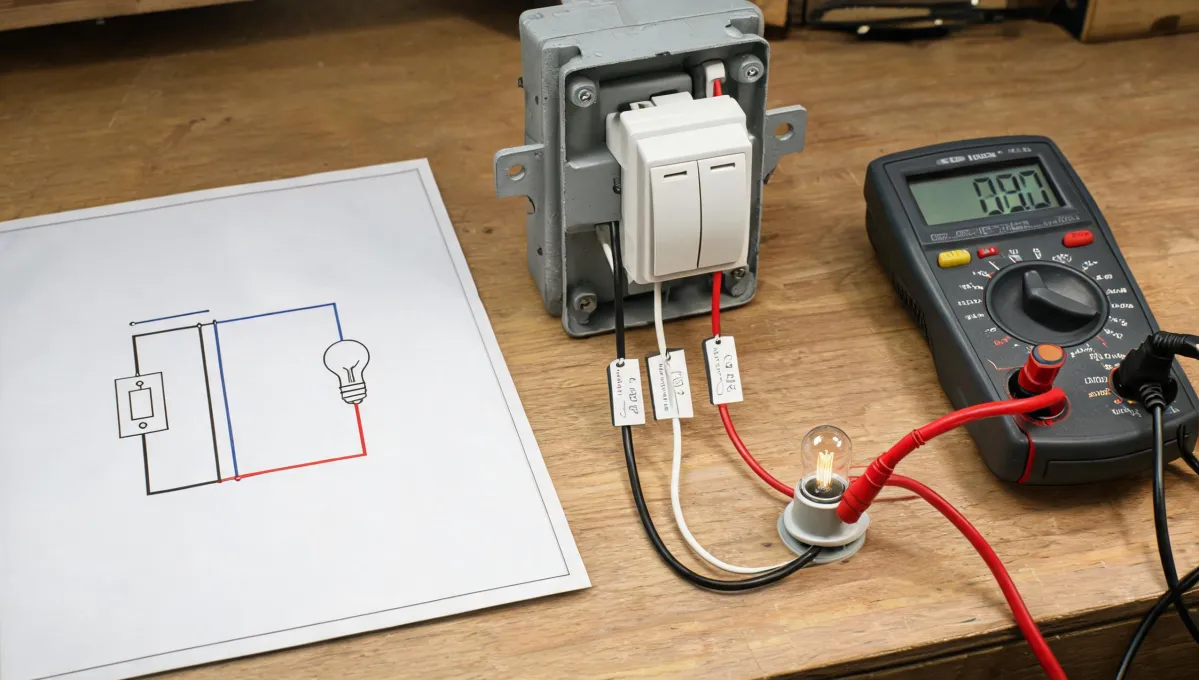
It would have been easy to stop at the tamper-resistant problem. But while I pulled the replacement order, I also printed the current Leviton switch outlet combo wiring diagram. That turned out to be just as important.
A combo switch and receptacle is two devices in one box. How you feed it depends on what the switch is supposed to control. If the switch controls a ceiling light, the receptacle still needs constant power. If the switch controls the receptacle itself, the wiring is different. The instructions that shipped with the generic units were vague and didn't match the terminal layout clearly. On a deadline, that kind of confusion leads to callbacks.
This is one of those small details that seems boring until it costs you a day. I've seen more than one jobsite where an installer assumes all combination devices wire the same way. They don't. Five minutes with the right diagram before rough-in beats five hours of troubleshooting after everything is in the wall.
The replacement order arrived at Marcus's site by 7:30 the next morning. His crew swapped the devices, followed the factory wiring notes, and made it through the inspection on Thursday. So glad I printed those diagrams. Almost sent just the product and assumed the rest. That would have been a bad call.
The Breaker OEM vs Private Label Question
That same night, Marcus sent me a screenshot from the same online supplier. He needed replacement breakers for a small control panel on the mechanical side of the project. The quote had two columns. One was the manufacturer-branded breaker. The other was a private-label option at roughly 20 percent less. The listing said, "same factory as OEM."
I had maybe twenty minutes to give Marcus an answer before he lost the chance to bundle shipping. Normally, I'd want to see the panel schedule, the breaker catalog numbers, the interrupting ratings, and the documentation that supports the substitution. There was no time for that. So I gave him the short version.
Private label isn't a bad word. Some private-label breakers are legitimate, listed products with proper documentation. The phrase "same factory" is not documentation. A circuit breaker has to be matched to the panel and the application. OEM vs private label isn't about brand snobbery; it's about traceability, listing, and knowing who stands behind the part.
In this case, Marcus had an inspection deadline and no time to chase a test report. I told him to stay with the OEM option. The private-label part might have been fine. But "might have been" is not a specification.
That is the kind of decision I think about when a customer asks for circuit breaker wholesale pricing. Wholesale doesn't mean every box on the shelf is interchangeable. A good wholesale distributor can explain what the standard is, what the panel accepts, and what paperwork you need. That's worth more than the discount on the invoice.
What I Do Differently Now
Marcus's emergency taught me something I already knew but sometimes forget: prevention is cheaper than rescue. A quick check at the ordering stage could have caught the wrong devices before they ever reached the jobsite. The replacement order worked, but it cost overnight freight, a morning of panic, and a lot of unnecessary stress.
Now, when a contractor tells me they're in a hurry, I ask different questions. I don't just ask what they need. I ask what it's going into, what inspection is coming, and whether they have the right instructions in their hands. It sounds simple, but it stops a surprising number of problems before they start.
Here is the checklist I use now, and I don't keep it secret:
- Confirm that the product number matches the spec, not just the description on a website.
- If tamper-resistant receptacles are required, verify the device actually carries that feature before it goes in the wall.
- Get the current wiring diagram before installation, especially for combination devices.
- For breaker OEM vs private label decisions, ask for documentation first and opinions second.
- When a deadline is tight, call someone who can confirm the details instead of hoping the listing is accurate.
That last point has saved me more times than I can count. I'm not saying everyone needs a distributor in their pocket. But for a job with an inspection date attached, a quick phone call beats a return shipment every time.
Marcus still gives me a hard time about the first order. The joke now is that he calls me before he buys anything, even wire nuts. That's fine. Five minutes of verification beats five days of correction. I have the invoice to prove it.