
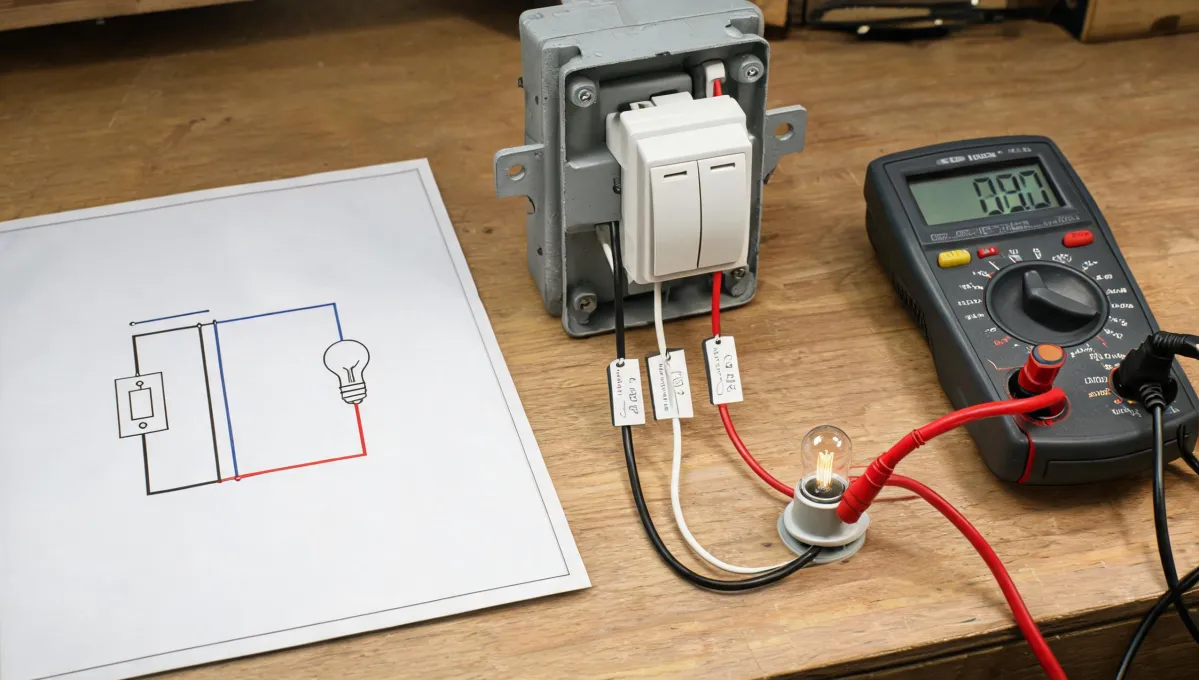
In late September 2024, I stood in a half-finished office suite and watched our electrician, Mike, pick through a box of switches. He didn’t yell. He just turned one over, ran his thumb across the back, and said, “Where did you buy these?” I felt a flash of pride—I’d just cut the electrical budget by 18 percent. “A wholesale website,” I said. Mike put the switch down on the box and shook his head. “These aren’t UL listed. I can’t install one of these in a commercial building.”
I’m not an electrician. I’m the office administrator for a 180-person consulting firm, which means I manage roughly $350,000 a year in facility and supply purchases. My job is to keep the office running without violating the budget or the law. When I took over purchasing in 2021, I thought the golden rule was obvious: collect three quotes and choose the lowest. That logic worked for chairs and printer leases. It didn’t work for electrical devices.
The Quote That Looked Great on Paper
We were consolidating two leased floors into one. The architect wrote “Leviton” into nearly every device spec: switches, dimmers, and tamper resistant outlets through the common areas. I put together a list of about 450 devices plus a subpanel for the new IT room. Finance was watching every line item, so when an online wholesaler offered me “the same thing” at less than half the authorized distributor’s price, I listened. Their spec sheet said 15A, 120V, single pole—identical to the Leviton switch I’d specified. I calculated the savings: $1,800. My boss approved the purchase.
I didn’t order a sample first. I didn’t ask for a UL certificate, even though I knew better. I told myself, “How different can a switch be?” Pretty different, it turns out. (Mental note: samples are non-negotiable.)
When the Boxes Showed Up
The cartons arrived in unmarked packaging. A few devices had no printed markings at all. Some stickers peeled off when you breathed on them. The so-called tamper resistant outlets had shutters that stuck; one didn’t close at all. But the real red flag appeared when Mike started separating products for the kitchenette. He needed a Leviton switch and tamper resistant outlet combo in one enclosure. The cheap unit’s wiring diagram didn’t match the actual screw terminals, and it definitely didn’t match Leviton’s layout. Mike pulled up the official Leviton switch outlet combo wiring diagram on his phone and placed it next to the cheap unit. “This isn’t an alternative,” he said. “This is a guessing game.”
He also checked the subpanel and breakers. The panel came from a seller who wouldn’t confirm what standard it met. The breakers were supposedly compatible but had no UL classification for that enclosure. Mike explained that a load center and its breakers are an engineered system. You can’t mix and match unless the breaker is specifically tested and listed for that panel. “If I install this,” he said, “the inspector will fail us. And if something happens later, your insurance company will have a field day.”
So all 450 devices sat in boxes, uninstalled. The contractor crew had to move to other work, and the two-day install turned into a three-week gap while we sorted out replacements.
To make it worse, the wholesaler couldn’t send proper documentation. The invoice had no registered business name, no line item numbers, and no tax ID that our accounting software could verify. Finance rejected the charge. The $1,800 in “savings” became an unresolved expense and a very tense meeting with my VP.
The Call That Fixed Everything
On Thursday, I called the electrical distributor Mike had been using for years. They carried Leviton and supported commercial projects. I explained what had happened, and the rep didn’t gloat. She said, “Send me your device schedule.”
The distributor’s quote arrived the same day. It was higher than the cheap online order by about $2,600, but it included something the other supplier never offered: accountability. The shipment contained genuine Leviton switches, the exact Leviton switch and tamper resistant outlet combo devices, and manufacturer spec sheets. For the subpanel, they worked with a circuit breaker distributor partner to supply breakers listed for the enclosure, and the panel distributor confirmed the main lug configuration with Mike before anything shipped.
Installation went fast. Mike’s crew unpacked the Leviton devices and finished in two days. The inspector signed off on the first visit. We opened on schedule. Even accounting was happy because every invoice had a clean structure.
What This Experience Cost Me
I still kick myself for not ordering a sample. If I had given Mike one unit to test before buying 450, he would have spotted the problem in ten minutes, and we would have saved three weeks. My biggest regret is that I treated price as the only variable in a system where safety and compatibility should come first.
I’m not saying private label electrical products are always bad. I’m saying the risk profile is different from furniture. For a switch to be code compliant, it needs a recognized certification, a clear wiring diagram, and traceability that a finance department can follow. Leviton and its authorized distributors provide those things. My cheap supplier provided three boxes full of uncertainty.
If you read a control panel wholesale cost guide before your next build-out, read it with this perspective: the cheapest supply cost is not the same as the lowest total project cost. You’re also paying for installation speed, inspector approval, insurance risk, and vendor accountability. In my experience, the lowest quote has cost us more in most cases—and this project was the most expensive lesson yet.
As of October 2024, I no longer make device-level procurement decisions based on unit price alone. Find a distributor who will answer the hard questions before you order—not just a Leviton switch supplier, but a partner who can show you the wiring diagram, verify the breaker listing, and back up the paperwork. It was Mike who best summed up the difference: “This is the project that pays me enough to sleep at night.”